In the manner of
David Sedaris
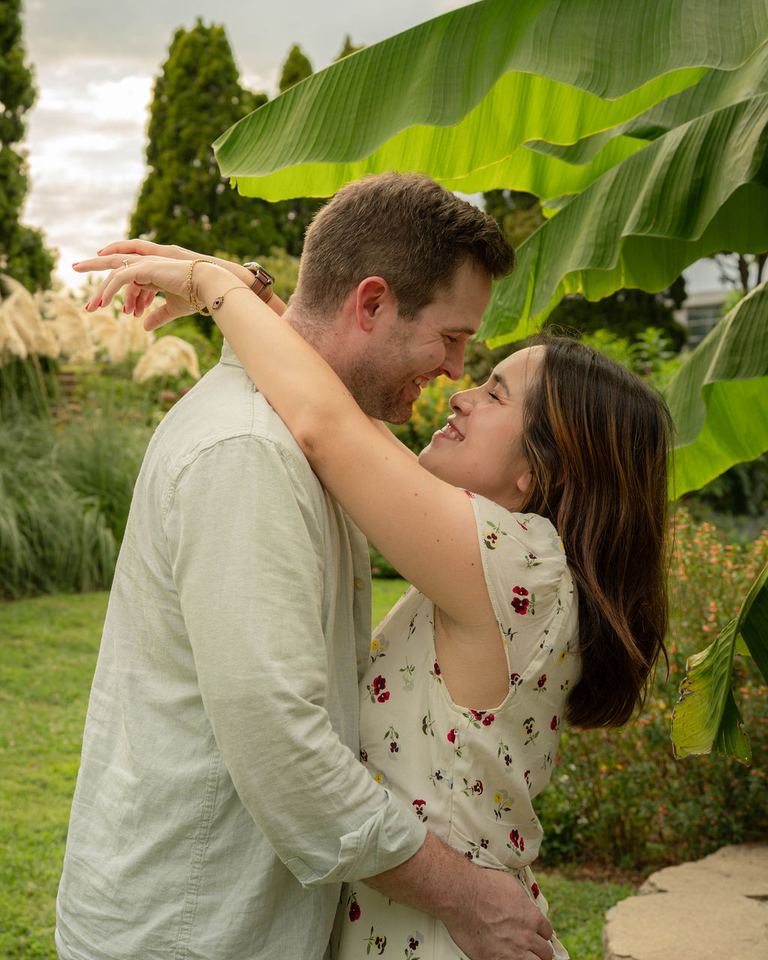
I spent eighteen months in London as a student, which is long enough to learn the Underground map and not nearly long enough to run into anyone in particular. Melissa lived there for twelve years. We never met. People find this remarkable, but London is a big place, and a student in it is a sort of houseplant: he stays where he’s put and is grateful for whatever light comes in.
It took New York. Melissa was in town on a visit, and a mutual friend brought us together at Le Poisson Rouge, on a night given over entirely to ’80s music. My memory of the evening is hazy. Melissa’s is not, and so she has become the official historian of our relationship, the way the one person in a car who knows the route ends up in charge of the radio. Her version is the one we use.
She went back to London. Then the borders shut, and the United States, which had waved me through my entire life without so much as a second look, wanted nothing to do with her. Every crossing was therefore mine. There was hardly anyone on the planes. You’d think an empty plane would be a luxury, and for the first hour it is. You stretch out. You take the armrest without asking. After that you start to wonder what all the people who stayed home know that you don’t.
That summer, 2021, we met in Iceland, which was for a while the one place on earth willing to admit the two of us at once. We went to hear bands and didn’t leave until 2 a.m., at which point the sun was still up, so that it felt less like staying out late than like refusing to go home in the afternoon. In the fall, Melissa came to New York for good.
Since 2019 I have logged the concerts I go to in a database, which is the sort of thing you keep to yourself on a first date. Melissa has turned up in it upwards of forty times. She enters the record at Le Poisson Rouge — not on the night we met, which predates the whole enterprise, but at a show some time later, so that the room where my life changed is represented in my files by an entirely different evening. She is now within striking distance of the top spot. I can think of no higher compliment, though I’m told that most people can.
In October 2021 we went to Santa Clara for the Colts and the 49ers. The Colts are mine; I’m from Indianapolis, and it isn’t optional. The 49ers are Melissa’s, by way of an uncle in the Bay Area, a part of the world she knows from time spent there, and her grasp of American football is better than that of most people born here, a fact I find both thrilling and faintly humiliating. That day an atmospheric river arrived, which is what California calls rain when it wants to be taken seriously. There weren’t enough ponchos to go around. We were soaked to the skin. I’m not going to say who won. We still live together, and I’d like to keep it that way.
In my family the game is Euchre, a card game native to the Midwest. Melissa was raised on Belote, which is more or less the same thing for grown-ups, and she regards Euchre the way a concert pianist regards “Chopsticks.” She is, in other words, overqualified. Once, across the table from my parents, she objected to how a hand had gone. My brother was brought in to arbitrate, and to keep things fair, nobody told him which side was which. He didn’t need telling. He found against Melissa. In my family, there is no higher court.
Before I proposed, I asked her parents for their blessing, over a video call. In French. My French at the time was the French of a man who has studied a list, because that is what I had done: I had prepared vocabulary for a range of scenarios, as though asking two people for their daughter’s hand were a matter of ordering at a bakery, only with higher stakes and no pastry at the end. I kept the list just out of frame and worked my way through it. When I finished, they said yes — not a polite yes but an emphatic one — and I hung up feeling like a diplomat. I had done it. In their language.
It was only later that I found out they hadn’t understood what I’d said. They had guessed what I was asking and decided to agree with it. I was disappointed in myself, which is the trouble with finding things out. My French has improved a great deal since then. It had a lot of room to, and it took every inch. I can now say all sorts of things to her parents and watch them understand me, which is wonderful, though a small part of me misses the old arrangement, in which I said more or less anything and they said yes.
My favourite book is The Count of Monte Cristo, which is about a man who takes his time and arranges everything in advance. I don’t want to overstate the comparison. He was plotting revenge, and I was plotting a tasting.
In July 2024 we went to France. In Champagne we met up with the friend Melissa has had since they were small, and her husband, and we were introduced at last to their daughter. I had put us down for Ruinart, a champagne house, which gave me cover to wear a nice shirt. The two of them teased me for it. They had no way of knowing the shirt had a job to do.
The people at Ruinart had agreed, in advance, to smuggle my proposal into the schedule under the name “extra tasting,” to be held far down in their crayères, chalk cellars cut deep below the ground. As we were being led down, Melissa grew concerned. Did her friend and her husband know about this bonus round? We were due at dinner with them. It’s a very Melissa thing, to worry about keeping friends waiting while being escorted into the bowels of the earth. She was still worrying when I got down on one knee, and only then did she stop. She said yes, and this time I’m certain the question was understood.
Ruinart gave us a bottle, and we opened it right there in the cellar, just the two of us. We finished it later at the apartment with her friend and her husband, who did not take back a single word about the shirt, and never have. From there we went south, where Melissa’s family celebrated with us.
Once we were engaged, we wanted a baby. In 2025, with Lily nearly here, we went to Cancún. We had gotten our hotel through a silent auction for charity, and it was awful. I won’t name it. Neither of us said anything at first. I didn’t want to be the one who complained about a prize, and Melissa, it turned out, felt exactly the same, so for a while we were two people on vacation, each pretending for the other’s sake to be having a perfectly nice time — which, now that I write it down, may be the most married we have ever been. Eventually we started browsing the competition nearby and discovered it was charming and cost less than we’d feared. We abandoned our winnings and took a room by the sea somewhere lovely. The rest of the trip was wonderful, and the first place has since become one of our favourite jokes, which is more than most people get out of a silent auction.
2025 also brought Lily, and, in June, a move from the East Village to Park Slope, in Brooklyn.
On 19 June 2027 we are getting married at Miolan Provence, in Le Cannet-des-Maures, about half an hour from Draguignan, the town that raised Melissa. Should I find myself addressing her parents that day, there will be no list. They’ll understand me, I’m almost sure of it. And if something gets lost along the way, I know from experience what they’ll say.
June 19, 2027 · Miolan, Provence