À la manière de
E.B. White
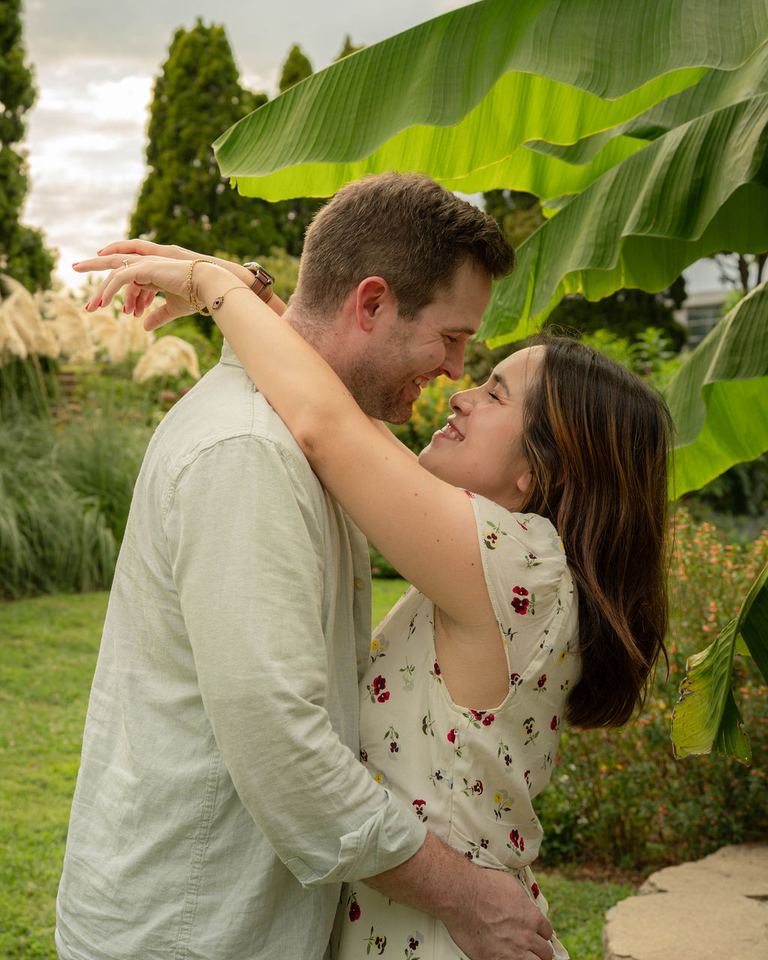
On the nineteenth of June, 2027, Melissa and Jimmy will be married at Miolan Provence, at Le Cannet-des-Maures, a commune of the Var. Draguignan, the town Melissa grew up in, is half an hour up the road. Half an hour is nothing. Melissa took the long way. She went by London and by New York, she was gone a good many years, and she came back with a man from Indianapolis, which is not something you would expect to pick up on that road.
London came first. Melissa lived there twelve years, long enough to stop noticing the buses. Jimmy had a turn there too, as a student, for something like eighteen months, which is a different arrangement with a city: a student has London on loan, and gives it back in more or less the condition he found it. They did not meet. I don’t hold this against London. It is a large place with a great deal on its mind, and it has never claimed to be in the business of introductions.
New York makes no such claim either, but it has a way of doing the work anyway, without being asked and without taking credit. They met at Le Poisson Rouge, a music venue, on a night given over to the ’80s, through a mutual friend who had brought them to the same room and, so far as anyone can tell, had no further plans for them. Melissa was in town on a visit; her life was still in London. This is the kind of thing the city does best: it gathers people who have no reason to be in the same place, plays them the music of another decade, and lets the rest happen.
Melissa remembers that night well. Jimmy remembers it the way you remember a town you passed through on a night train: the lights, the general shape of it, the firm conviction that it was there. Between the two of them they have the whole evening, and I have come to believe that this is the usual division of labour in a marriage, and not a bad one.
Then the borders shut, and the ocean, which had been a matter of an afternoon and a bad meal, became a matter of policy. America kept its door closed to Melissa. Britain kept its door open to Jimmy, so Jimmy did the crossing, again and again. Whole cabins of unoccupied seats went over the Atlantic with one man among them who had somewhere to be.
In the summer of 2021 they found the one country whose rules admitted them both. It was Iceland. They spent a night at live music and came out at 2 a.m. into a sky that was still plainly day. I have always thought a northern summer night is a kind of honest bookkeeping. The day will not close its accounts until you have finished with it, and they had not finished.
That autumn Melissa came to New York, this time to stay.
In October they were in Santa Clara, where the Colts had come to meet the 49ers. Jimmy is for the Colts, as an Indianapolis man is obliged to be. Melissa is for the 49ers, on account of an uncle out in the Bay Area, a part of the world she knows from time spent there, and her grasp of American football would embarrass a good share of the country that invented it. An atmospheric river came in over the stadium, and the stadium, being open to the sky, took all of it. Ponchos were scarce. They got soaked, both of them, impartially. I will not say who won. It doesn’t matter at a wedding, and at a wedding it would.
Jimmy keeps a record of the concerts he goes to. He has kept it, in a database, since 2019. Melissa’s name turns up in it upward of forty times. The earliest of these is a show at Le Poisson Rouge, a later one, in the same room where they had met, and she is not far now from the top of it. There is something I find touching about a database, a thing built for counting, that turns out over the years to be a record of who was standing next to you.
There is also the matter of cards. On Jimmy’s side they play Euchre, a Midwestern game, and always have. On Melissa’s side they play Belote, and in Melissa’s estimation Euchre is simply Belote with the hard parts taken out, a view she holds calmly. Once, at the table with Jimmy’s parents, she challenged a hand. The question went up to Jimmy’s brother, stripped of names so that he could rule without favour. It was a kindly fiction, and it lasted about as long as it took him to look up from the cards. He found for the other side.
Before he proposed, Jimmy asked Melissa’s parents for their blessing, over a video call. He asked in French, approximately. Out of sight of the camera he kept a written sheet of vocabulary, phrases sorted by the various ways the conversation might go, the way a careful man packs for weather he can’t predict. He delivered his request. They said yes, emphatically. He ended the call triumphant, and for a while he had every right to be.
Later he learned that his French had not landed. They had worked out the question on their own, which is a different thing, and said yes to their own reconstruction. Jimmy felt let down by his performance. I think he was too hard on himself. The words did not get through, but the question did, and so did the answer, and if you had to choose which half of a conversation to lose, you could do a good deal worse than the grammar.
In July 2024 they were in France, in Champagne, and the friend Melissa grew up with and has kept closest ever since came to join them, with her husband and their daughter, whom Jimmy and Melissa were meeting for the first time. Jimmy announced that the trip to Ruinart, the champagne house, called for a nice shirt, and put one on. The friend and her husband teased him about the shirt. He took it well, having his reasons.
The reasons were underground. Ruinart keeps its wine in crayères, chalk cellars cut far beneath the town, and Jimmy had arranged with the staff that he and Melissa would be taken down for an “extra tasting.” I have never stood among those chalk walls, but I know the kind of stillness that lives in such places, because I have known it on a lake in the early morning, before anyone has put a boat out: the air holds still, the light stays where it is put, and you could believe the year has stopped turning. As they were being led down, Melissa had one worry, and it was a practical one. Had he told her friend and the friend’s husband about this detour? Dinner with them was waiting. She was still turning the question over, all the way down and some way past it, when Jimmy went down on one knee.
At that the worry went wherever worries go when they are no longer needed. Jimmy proposed. She said yes.
The house gave them a bottle, and they opened it there in the chalk, just the two of them. They made it to dinner after all, a long and lovely one, and what was left in the bottle they finished afterwards at the apartment with the old friend and her husband. The jokes about the shirt were never withdrawn. They stand to this day. Afterwards they went south to celebrate with Melissa’s family.
Once they were engaged, they made up their minds to have a child. In 2025, with Lily nearly due, they flew to Cancún. They had won the first hotel at a silent auction held for a good cause, and it was awful. Neither of them said so. Each meant to endure it rather than be the first to confess what the other could plainly see. Then they took a look at the neighbours, which proved charming and not that expensive, wrote the prize off, and removed to a fine place by the water. After that, Cancún behaved very well. The first hotel remains, by general agreement, the funniest part of the whole trip.
Lily arrived in 2025. That June they left the East Village for Park Slope, which is to say one New York for another. The two are about as alike as a river and a lake: both water, both the same city, but one of them is going somewhere in a hurry and the other one lets you sit by it.
And so the route comes back to the Var. I find that I keep coming back to the distance. Draguignan to Miolan Provence is half an hour by car. Melissa covered it by way of London, an empty airliner, a flooded stadium, a chalk cellar and two neighbourhoods of New York, and she did not come back alone.
It is a short drive. It was a long way.
19 juin 2027 · Miolan, Provence